A classic nihonto represents a gorgeous piece of craftsmanship, but say you want to convey your personal character? Customizing your armament is a fulfilling journey, allowing you to create a truly uncommon piece. From the grip wrapping and fastening to the tsuba design and cutting motif, each segment offers a chance for custom touch. This inquiry delves into the realm of katana enhancements, providing perspectives for both apprentices and expert enthusiasts hoping to make their signature on the classical art of the samurai.
Newcomer's Legitimate Mastery
For those prepared to embark on the enriching journey of martial arts involving swords , 1060 steel katanas supply an remarkable entry point. This specific grade of tool steel balances a ideal mix between low price and quality . While less than hard as superior-grade steels, 1060 provides a adequate level of sharpening , making it perfect for newcomers to master the essentials of cutting tool servicing and understand the refinement of expertly made Japanese weaponry. It’s a fantastic choice for building experience without the budgetary burden of more sophisticated steels.
T-10 Steel Blades : Achieving Effectiveness and Cost
Assisting practitioners seeking an authentic blade experience without shattering the wallet , T10 metal katanas represent a compelling option. These tools offer a significant improvement in durability compared to middling alternatives, exhibiting satisfactory edge retention and tolerable flexibility for primary severing techniques. While not rivaling the premium characteristics of top-tier steels like T100 or folded metal , T10 provides a effective blend of capacity and reasonableness , making them a trendy choice for novices and those on a restrained income .
Moving beyond the Keel : Tailoring Your Sword's Fittings and Grasp
Whereas the sharpened blade is undeniably the important point of a katana, truly improving its aesthetic lies in the exact customization of its details and handle . This process allows craftsmen to reveal their unique design . Explore the vast possibilities: menuki - decorative ornaments that enhance visual beauty ; the hamon sleeves – often exquisitely chiseled; the tsuka foundation itself, wrapped in customary ito string ; and the fusa knob , which can be crafted from various resources like precious metals or cartilage .
- Choose subjects that connect with you.
- Evaluate with diverse composites .
- Focus on robustness for a enduring mark .
The Magnetism of the Katana: Background, Fabrication, and Iron
Every samurai blade features a special allure, steeped in periods of Pacific Rim history and custom . More than merely a device of skirmishing, it's a embodiment of the knight ethos – a fusion of prowess and self-control . Its advancement spanned plentiful generations, with early blades evolving into the refined curvature and sharp edge we accept today. The workmanship involved is truly impressive , requiring years of study to conquer . The process involves a elaborate folding of metal bloom, creating layers that improve the cutting edge’s flexibility and carving ability. Numerous schools of smithing arose , each with their unique secrets and approaches for achieving the supreme proportion and crispness - a truly laborious pursuit.
- Initial Katana models
- The significance of the oriental sword in knight culture
- Conventional manufacturing practices
Identifying the Fitting Steel for Your Katana Project: 1060 vs. T10
Selecting the right steel is critically important for any sword project, and the choice between 1060 and T10 can be complex. 1060 is a common American metal, offering a decent balance of hardness and toughness, making it relatively easy to condition. However, T10, a Asian steel, habitually boasts amplified wear fortitude and can likely achieve a enhanced conclusive hardness, although it can be markedly troublesome to handle and requires precise heat refinement. Consider your qualification and expected effects: for a first-timer, 1060 may be a easier origin, while the expert smith might admire the supplementary attributes of T10.
- Simplicity of Utilizing
- Resistance
- Definitive Durability
Opening the Possibilities: Elite Katana Enhancement Procedures
Perfecting the skill of sword tuning extends far beyond basic stropping. Serious masters are now investigating advanced techniques to truly expose a blade's hidden potential. This features intricate work with the temper pattern, utilizing specialized compositions for differential strengthening and carefully determining the design of the defense plate to optimize balance and handling. Beyond purely functional customizations, artisans are increasingly focused on attaining unparalleled aesthetic splendor, through complex imprinting and layered coatings that truly transform a katana into a fine art.
Building a 1060 Sword from Basic Metal to Beauty
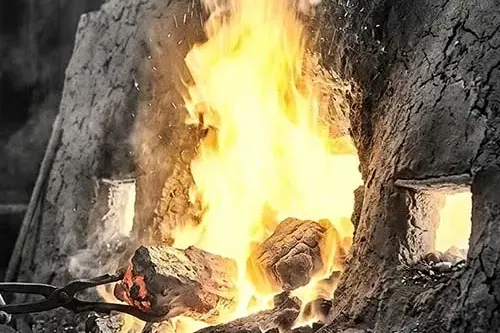
The journey starts with plain 1060 iron , a solid material far distant the fine katana it will evolve . Accomplished bladesmiths use a sophisticated process of layering and forming the raw steel, repeatedly burning it and flattening it to discard impurities and build a uniform grain structure. This tiring process, often katana lasting for periods , builds the fundamental resilience and suppleness characteristic of a standard Japanese blade . Extra heat refinements, including accurate hardening and conditioning , are indispensable to achieve the intended steadiness of sharpness, robustness and beauty .- Doubling: Decreases impurities and generates grain structure.
- Forging: Models the steel into the initial blade form.
- Conditioning: Regulates the final hardness and flexibility.
The Continuing Pull of the Katana: Comprehensive Review of Metalwork and Tailoring
Each established katana remains a captivating symbol representing Japanese civilization , its magnetism far outstripping mere weaponry . Forged from a special steel and frequently featuring intricate motifs , the practice of creation itself is a esteemed art. Beyond the essential craftsmanship, the ability to alter a katana - from the temperation to the hold wrapping and sheath - facilitates for a wholeheartedly individual expression for both collectors and users alike. This blend of ancient steelwork and boundless personalization leads the katana's continued appeal across the world .
