
The Small Parts That Make or Break the Drop: How Streetwear Brands Should Audit Zippers, Aglets, and Metal Trims Before Bulk
Streetwear has reached a point where the smallest parts carry real weight. A hoodie can have the right wash, the right graphic hit, and the right silhouette, then lose all of its energy the second the zipper drags, the aglet starts flaking, or the metal eyelet stains the fabric after wear. In this category, trims are not background decoration. They help decide whether a piece feels fully resolved or just almost there.
A lot of brand teams find that out later than they want to. On the sample rail, hardware problems can hide behind good styling, good lighting, and low wear time. Then the product moves into fit approval, photo shoots, sales samples, or early customer use, and the weak points start speaking up fast. What looked premium in the first pass suddenly feels unfinished. That is why hardware quality control matters so much in modern streetwear: not because trims are small, but because they are visible, tactile, and tied directly to how a product is judged.
Why does hardware QC hit harder in streetwear than in ordinary apparel?
Because in streetwear, hardware is not just functional trim. It changes how a garment hangs, looks up close, sounds in motion, and ages over time. When that hardware feels off, the issue lands as a design problem and a wear problem at the same time, which makes the whole product feel less thought-through.
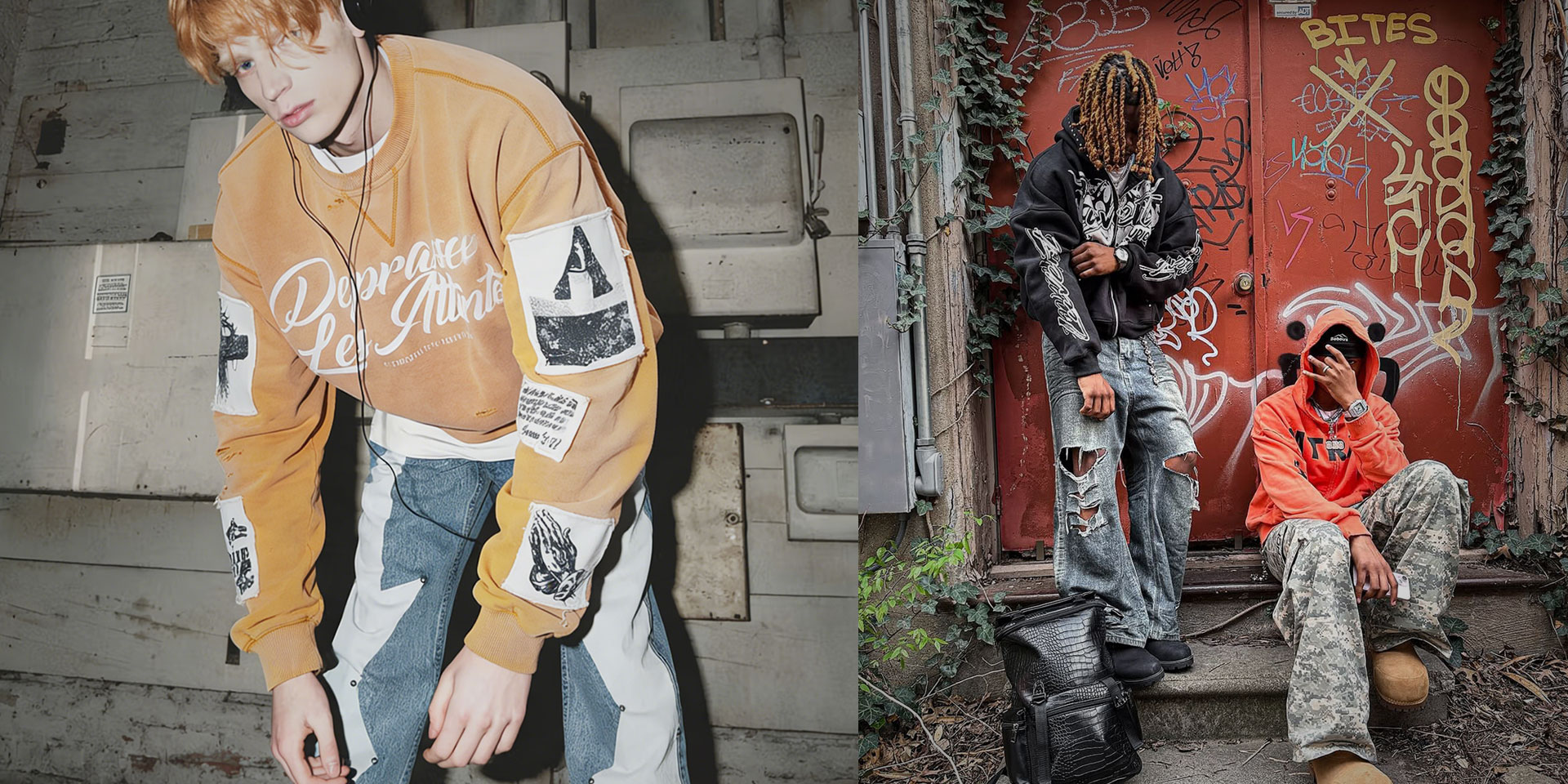
That matters more now than it did a few years ago. Product images are closer, social content is more detailed, and buyers spend more time zooming into trim finish, zipper teeth, wash texture, and graphic balance. A plain fleece hoodie can get away with average hardware more easily. A heavyweight zip hoodie with distressing, custom pulls, garment wash, and metal accents cannot. Once the product is positioned as premium or design-led, every trim starts acting like part of the creative direction.
This is also where a lot of general apparel factories lose the plot. They may treat trims as purchasing line items instead of product-defining parts. But in streetwear, the zipper gauge changes the front attitude of the garment. The puller shape affects how the piece reads in hand. The aglet finish can push a hoodie toward sport, luxury, skate, or washed vintage territory. The eyelet color can either sharpen the whole palette or flatten it.
That is why mature product teams do not just ask whether a factory can source a zipper or attach an aglet. They ask whether the team understands what that trim is doing for the silhouette, the handfeel, the visual weight, and the long-term wear story. If the answer is no, the trim may still pass a quick visual check while quietly lowering the whole product standard.
Which zipper checks actually tell you whether a style is bulk-ready?
The zipper checks that matter most are the ones that test stress, movement, and failure points under repeat use. A smooth first pull is not enough. Brands need to know how the chain behaves under tension, how the stops hold, how the slider lock performs, and whether the pull tab attachment stays clean under real handling.
Major fastening manufacturers already frame zipper testing this way. YKK notes that zipper strength evaluation draws on methods based on JIS-S3015 and ASTM D2061, and lists tests such as chain crosswise strength, top-stop holding strength, bottom-stop holding strength, slider lock strength, and slider tab pull-off strength . That is a useful reminder for streetwear teams: a zipper should never be approved on appearance alone.
“There are various methods by which to evaluate zipper strength.” — YKK Americas, Product Testing Methods
In practical streetwear development, three layers of zipper review matter. The first is movement. Does the zipper travel cleanly when the garment is worn, bent, washed, and handled repeatedly? The second is structure. Do the teeth, tape, stops, and slider keep their shape when the front panel is under tension, especially on heavyweight fleece, cropped zip silhouettes, or outerwear with thicker seam build-up? The third is finish. If the zipper is plated, coated, painted, or customized, does that surface keep its look after abrasion, light wear, and laundering?
A smart move is to test zippers inside real prototype garments, not only as loose trims. Bulk problems often show up when the zipper has to work with heavy rib, washed fabric, panel seams, or thicker plackets. A zip hoodie that looks clean on a table can behave very differently once the body twists, the hood weight pulls backward, or the garment goes through wash and dry cycles. The point is simple: if the zipper lives inside a demanding garment, the test has to live there too.
How should brands test aglets and drawstrings before they turn into low-grade details?
Aglets and drawstrings should be tested as visible performance details, not afterthoughts. The key checks are attachment strength, surface durability, fiber wear, laundering behavior, and color match against the full garment. If those details fail, the hoodie does not just age badly; it starts looking underdeveloped.
This is where streetwear product language really shows up. On a washed hoodie, the cord thickness changes how the neck opening frames the face. On a football-inspired fleece or cropped zip style, the aglet finish can tip the mood toward clean metal, vintage wear, or a rougher industrial note. Those are not small styling choices. They help decide whether the product feels intentional.
From a quality-control angle, brands should begin with the obvious mechanical question: does the aglet stay on? Pull tests are basic, but they are not enough by themselves. Teams should also look at whether the metal cracks at the crimp, whether coated finishes chip at the edges, and whether laundering or rubbing creates visible wear faster than expected. Bureau Veritas includes trim testing for zippers, buttons, snaps, elastics, and metal hardware within broader apparel quality programs, which is another sign that trims need to be evaluated inside the same risk framework as the garment itself .
Drawstrings deserve their own discipline too. A cord can pass color review and still disappoint in wear if the yarns start lifting, the surface pills, or the cord loses shape after washing. On premium streetwear, that matters because the drawcord sits in a high-visibility zone. It is often photographed from close range, touched first in retail, and used repeatedly. If the cord looks tired after a short wear window, the whole hoodie starts reading flatter.
Good teams also review aglets and drawcords together, not separately. A heavy metal tip on a weak cord will stress the attachment area. A washed cord paired with a bright plated tip can look mismatched even if both parts are technically acceptable on their own. Streetwear development is full of these “good separately, wrong together” moments. That is why trim QC has to stay connected to the full garment mood, not just the incoming trim carton.
Which metal trims need a real corrosion plan instead of a quick visual pass?
Any metal trim that touches skin, catches moisture, rubs against fabric, or acts as a style focal point needs a proper corrosion and finish review. That usually includes eyelets, buttons, rivets, snaps, zipper parts, cord ends, and decorative hardware, especially on washed, dark-dyed, or outerwear-based styles.
Corrosion is not just a beauty issue. SGS notes that corrosion on apparel and footwear accessories can change the appearance of metal trims, stain nearby fabric, and even affect trim function . The same SGS note points to common corrosion drivers such as temperature, time of wetness, humidity, air pollutants, and electrolytes . In plain terms, that means the metal part does not need dramatic abuse to start telling on the garment. Sweat, washing, damp storage, and urban wear environments can be enough.
“Corrosion will affect the aesthetic properties of a product, may cause staining on the adjacent fabric or material, and may affect the function of the metal trim.” — SGS Safeguards
For streetwear, the highest-risk trims are usually the most visible ones. Think rivets on washed denim, snaps on varsity jackets, eyelets on heavyweight fleece, and metal ornaments on cargo or mixed-media pieces. If those parts pick up discoloration too quickly, the product can drift from “worn-in” to simply worn-out. That difference matters. Good vintage direction feels deliberate. Bad metal aging feels neglected.
A real corrosion plan does not have to be overcomplicated. It just has to be specific. If the garment is enzyme washed, test the trim with that wash. If it is meant for fall outerwear, review the hardware after moisture exposure. If it sits on black fleece or dark denim, check for staining transfer. The point is not to chase perfection. The point is to stop pretending that a visual pass on day one can predict how metal will behave once the product enters actual wear.
Where do hardware failures usually show up between sample approval and bulk production?
Hardware issues rarely start with a dramatic collapse. They usually arrive as small shifts between the approved sample and the production run: a slightly different zipper pull, a plating tone that runs flatter, a cord that feels lighter, or a trim substitute that technically fits but changes the whole read of the garment.
This is why hardware risk is often missed early. Samples are made in smaller numbers, with more attention, and often with whatever trims are easiest to source at that moment. Bulk production brings different pressures: reorder timing, trim availability, plating lot variation, washing interactions, tighter line speed, and setting differences from operator to operator. A hoodie approved with one cord density may ship with another. A clean gunmetal finish may come back slightly warmer. A zipper may come from a different production lot and still pass paperwork while feeling rougher in use.
The factory side of the problem is not always dishonesty. Sometimes it is simple fragmentation. The garment team, trim buyer, sample room, wash unit, and final inspection team may all be working from partial information. If nobody is managing the hardware as part of the product story, each small adjustment feels harmless. Then the full garment lands in bulk and the energy has leaked out of it.
This is also where brand teams need better questions. Not “Can you source this trim?” but “What is the back-up if this exact trim lot is unavailable?” Not “Can you match the sample?” but “How are you checking tone, pull feel, attachment pressure, and wash reaction before bulk lock?” Those questions reveal whether the production team is thinking in garment reality or just ticking boxes.
And when teams compare a recent roundup of , this is one of the sharpest dividing lines to watch: some factories can make the sample look right, while others build trim review into the pre-production system so the bulk piece still carries the same product attitude.
How can sourcing teams build a hardware QC flow that protects the launch instead of slowing it down?
The best hardware QC flow starts early, stays tied to the garment, and creates decision gates before bulk. Brands need trim specs, prototype wear testing, finish checks after wash, pre-production sign-off, and batch tracking during production. Done right, this does not slow the calendar; it prevents late-stage surprises that wreck it.
A strong process begins at trim specification, not after sample approval. That means locking the material type, finish language, dimensions, puller shape, cord thickness, color target, and acceptable wear window. If the brand is building a washed zip hoodie with dark nickel hardware and heavy cotton drawcords, that trim direction should be documented as part of the product intent, not left as a rough visual reference.
Next comes development-stage testing. Bureau Veritas highlights product evaluation at development and pre-production stages as part of apparel quality assurance, alongside defect analysis and appearance, quality, and performance evaluation . That is exactly the right rhythm for trim-heavy streetwear. Prototype garments should be worn, washed, flexed, and reviewed as garments. If the style has custom zipper pulls, specialty cord ends, plated eyelets, or decorative rivets, those details should be checked after real handling, not just on the hanger.
Then comes pre-production discipline. Before bulk starts, sourcing teams should approve the trim card, the trim placement, the final wash interaction, and the hardware appearance under the lighting conditions the product will actually be sold under. This is also the stage to confirm whether the approved trim is the real production trim, not a lookalike that happened to be in the sample room. Batch coding or lot tracking helps here, especially on visible metal parts.
The final step is in-line and end-line verification. Teams should pull garments during production to check zipper feel, puller attachment, plating tone, drawcord wear, snap pressure, and staining around metal insertion points. If a problem shows up, it is far cheaper to stop and correct it mid-run than to discover it after packing. That is not glamorous work, but it is the kind of quiet control that protects launches, protects margin, and keeps a strong product from losing its edge at the last minute.
The broader lesson is simple. In streetwear, trims do not live on the edge of the garment story. They sit right in the middle of it. Brands that treat hardware like a real product layer usually end up with pieces that feel sharper in hand, stronger in wear, and more convincing in market. Brands that do not often learn the same lesson the hard way: the graphic may sell the click, but the zipper, aglet, and metal finish often decide what the buyer remembers after the first week.
Why Scaling Streetwear Brands Are Choosing OEM Over Private Label for Oversized Programs
When an independent streetwear brand launches an oversized program, the initial quote often hides the true cost of production. A cheap sample might look promising on a hanger, but when the bulk order arrives with inconsistent shoulder drops, shrinking heavy fleece, and graphic placements that shift across sizes, the damage to the launch calendar and consumer trust is already done. For brands with established sales channels, the tension between design ambition and manufacturing discipline becomes the ultimate bottleneck. The question is no longer just where to find a supplier, but when to stop relying on stock-based private label solutions and invest in a true OEM streetwear manufacturer capable of repeatable, bulk-ready execution.
When Does an Oversized Program Outgrow Private Label Manufacturing?
For established streetwear brands, private label production becomes a liability when custom fits, heavy fabric weights, and complex washes are required to maintain brand identity. Moving to an OEM streetwear manufacturer is a strategic necessity to control sample-to-bulk consistency and protect the launch calendar from unpredictable variations.
Many brands assume that making an oversized hoodie or a boxy tee is simply a matter of scaling up standard dimensions. However, the reality of streetwear manufacturing is far more complex. Private label solutions—often built around pre-existing blanks or standardized templates—are designed for speed and basic customization, not for the nuanced demands of premium streetwear. When a brand requires a specific 400gsm French terry, a custom enzyme wash, or a precise dropped-shoulder silhouette that drapes correctly across a full size run, the limitations of private label become painfully obvious.
The transition point usually occurs when a brand realizes that their product value is no longer just in the graphic, but in the tactile and structural execution of the garment itself. If your consumers can feel the difference in fabric hand-feel or notice a slight imbalance in the hem, you are no longer competing in the basic apparel space. You need a production system that understands pattern development from scratch. OEM streetwear development allows product teams to dictate every variable—from the exact tension of the ribbing to the specific shrinkage rates of custom-dyed fabrics—ensuring that the final product aligns perfectly with the brand's creative direction.
Why Do Cheap Quotes for Oversized Streetwear Often Hide the Highest Risks?
The lowest manufacturing quote rarely reflects the final cost of an oversized program. Cheap quotes often mask skipped testing phases, lower-grade fabric sourcing, and weak quality control, leading to bulk inconsistencies that damage consumer trust and force costly remakes.
In the procurement phase, it is easy to be seduced by a low unit price. However, experienced sourcing teams know that an unusually low quote from a general apparel manufacturer is often a red flag. Oversized streetwear requires significantly more fabric yield per garment, and maintaining the structural integrity of heavy materials like 500gsm fleece demands specialized machinery and skilled operators. When a factory underbids a project, they typically recover their margins by cutting corners where the brand might not immediately notice.
These hidden compromises manifest during bulk production. You might see trim substitutions where a cheaper zipper replaces the specified hardware, or batch-level variations where the vintage wash looks completely different from one box to the next. More critically, cheap production often skips essential pre-production testing, such as shrinkage and colorfastness checks. When an oversized hoodie shrinks disproportionately after the first wash, the consumer blames the brand, not the factory. Established streetwear brands understand that paying a premium for a specialized streetwear factory is not just about buying better fabric; it is an investment in risk mitigation, predictable lead times, and a repeatable sample-to-bulk process.
How Does Sample-to-Bulk Failure Damage a Streetwear Brand's Launch Strategy?
Sample-to-bulk mismatch is a severe commercial risk that disrupts drop schedules and erodes brand credibility. When the final production run fails to replicate the approved sample's fit, wash, or finish, brands face delayed launches, wasted inventory, and alienated customers.
The streetwear business model relies heavily on the drop culture—tightly coordinated, highly anticipated product releases that drive immediate sales. This model requires absolute precision in the supply chain. A perfect pre-production sample is meaningless if the factory lacks the internal systems to replicate that exact standard across 2,000 units. Sample-to-bulk inconsistency is the most common point of failure for brands that rely on unspecialized suppliers.
Imagine the scenario: the marketing campaign is live, the influencers have teased the product, and the release date is set. Then, the bulk shipment arrives. The oversized tees, which draped perfectly in the sample phase, now feature a stiff, uncomfortable hand-feel due to poor wash control. The graphic placement on the XL sizes is completely misaligned compared to the mediums. At this point, the brand faces a devastating choice: delay the launch to remake the goods—losing momentum and revenue—or ship an inferior product and risk permanent damage to their reputation. This is precisely why brands with real market traction prioritize manufacturing partners who have built their entire operation around bulk-ready control and strict quality assurance protocols.
What Should Procurement Teams Evaluate When Choosing an OEM Streetwear Manufacturer?
Procurement teams must evaluate a manufacturer's ability to execute complex techniques consistently at scale. Key indicators include their approach to tech pack review, fabric sourcing depth, wash control protocols, and their track record with technique-heavy streetwear production.
Evaluating a potential manufacturing partner requires looking past their portfolio and examining their actual production floor discipline. A true streetwear production partner operates differently from a standard cut-and-sew facility. The evaluation process should start with how they handle the initial tech pack. Do they simply accept it and quote a price, or do they actively review the construction details, flag potential shrinkage issues with the chosen fabric, and suggest technical adjustments to improve the final drape?
Furthermore, procurement teams need to assess the factory's capability in managing multi-technique garments. Oversized streetwear often combines custom dyeing, heavy enzyme washes, and complex applications like puff print or distressed embroidery. A factory might be excellent at screen printing, but if they cannot control the temperature and timing of an acid wash, the entire batch can be ruined. Brands looking for a reliable partner often turn to regions with deep supply chain density. For example, when searching for a , brands expect a partner that offers not just assembly, but comprehensive development support—from sourcing custom heavyweight cotton to managing intricate finishing details with high repeatability.
The following table outlines the core evaluation criteria that distinguish an OEM streetwear manufacturer from a generic private label supplier:
How Does Fabric Selection Dictate the Success of an Oversized Streetwear Program?
The foundation of any successful oversized streetwear piece is the fabric. Choosing the right weight, drape, and composition is critical because oversized silhouettes rely entirely on how the material behaves under tension, during washing, and when worn by the consumer.
When brands attempt to run an oversized program through a private label supplier, they are typically limited to whatever stock fabrics are available. These are usually standard 180gsm to 220gsm cottons for t-shirts, or 300gsm to 350gsm fleece for hoodies. While these weights work fine for standard fits, they fail spectacularly when applied to oversized patterns. An oversized t-shirt made from lightweight cotton will cling awkwardly to the body, losing the boxy, structured look that defines modern streetwear. Similarly, an oversized hoodie made from standard fleece will lack the necessary rigidity in the hood and the proper drape in the sleeves, resulting in a garment that looks sloppy rather than intentionally oversized.
This is where a specialized OEM streetwear manufacturer becomes indispensable. They understand that a premium oversized t-shirt might require a custom-milled 260gsm to 300gsm heavyweight cotton jersey to achieve the correct structural integrity. For hoodies, they might recommend a 450gsm to 500gsm French terry or a densely knit brushed fleece that holds its shape and provides the substantial hand-feel that streetwear consumers expect. Furthermore, these specialized factories have the sourcing depth to offer custom blends, precise yarn counts, and specific knitting techniques that directly influence the final drape and durability of the product. By controlling the fabric development from the yarn stage, brands ensure that their oversized garments possess the premium tactile qualities that justify a higher retail price point.
Why Must Graphic Application and Finishing Be Integrated into the Production Process?
In premium streetwear, graphic application is not an afterthought; it must be integrated with the fabric and wash processes. Specialized factories ensure that techniques like puff print, high-density embroidery, and distressing interact flawlessly with the garment's construction and bulk execution.
The private label model often treats the garment and the graphic as two separate entities: you buy the blank, and then you print on it. This disjointed approach is fundamentally incompatible with high-quality streetwear. When a brand wants a cracked screen print on a heavy acid-wash tee, or a chenille applique across the seam of a heavyweight hoodie, the decoration cannot be applied as an afterthought. It must be engineered into the production workflow from the very beginning.
OEM streetwear development allows for this critical integration. For example, if a garment is going to undergo a heavy enzyme wash, the factory must determine whether to apply the screen print before or after the wash. Applying it before might create a desirable vintage fade on the graphic, but if the ink is not formulated correctly, it could wash away entirely. Similarly, heavy embroidery on a 400gsm fleece requires specific backing materials to prevent the fabric from puckering or distorting. A specialized cut-and-sew streetwear factory manages these interactions holistically. They test the compatibility of the ink with the custom-dyed fabric, ensure that the embroidery tension is calibrated for the specific material weight, and oversee the final finishing details—such as custom neck tape, branded hardware, and precise distressing—to deliver a cohesive, premium product that stands up to consumer scrutiny.
Why Is Precision in Fit and Grading More Critical for Oversized Garments?
Oversized does not mean simply sizing up. It requires meticulous pattern development and complex size grading to ensure the garment maintains its intended silhouette—such as a dropped shoulder and cropped hem—proportionally across all sizes.
A common misconception is that achieving an oversized fit simply involves ordering a size XL pattern and labeling it a Medium. This approach, often utilized by generic private label suppliers, results in garments with disproportionately long sleeves, excessively wide necklines, and a hem that falls too low on the body. True oversized streetwear is highly engineered. The shoulder seam must drop at a precise angle, the chest must be widened without creating excess bulk under the arms, and the length is often cropped to maintain a balanced proportion.
An OEM streetwear manufacturing partner approaches oversized fit through rigorous pattern development. They start by creating a custom block that reflects the brand's specific aesthetic vision. Crucially, they understand the complexities of size grading for oversized garments. Grading an oversized pattern is not a linear mathematical progression; it requires adjusting specific points of measure differently to ensure that a size Small and a size XXL both deliver the same visual impact and proportional drape. This level of technical execution involves multiple rounds of fit sessions, detailed tech pack revisions, and a deep understanding of how different heavyweight fabrics will behave once cut and sewn. Without this specialized pattern-making expertise, brands risk delivering inconsistent fits that confuse their customer base and drive up return rates.
How Do Complex Wash and Dye Techniques Expose the Limits of Private Label Suppliers?
Streetwear aesthetics heavily rely on custom wash and dye processes like acid wash, pigment dye, and vintage fading. These techniques require precise chemical control and shrinkage management that standard private label suppliers simply cannot provide consistently.
Modern streetwear is defined as much by its finish as by its fit. Consumers seek garments that possess a lived-in, vintage character, achieved through aggressive wash techniques such as heavy enzyme washing, stone washing, pigment dyeing, or acid washing. These processes are inherently volatile. They subject the fabric to extreme stress, altering its color, hand-feel, and most importantly, its dimensions. Private label suppliers, who deal primarily in pre-shrunk, standard-dyed blanks, lack the specialized facilities and the technical know-how to execute these finishes with any degree of reliability.
When an established brand moves to an OEM streetwear manufacturer, they gain access to controlled, bulk-ready wash programs. A specialized factory will conduct extensive shrinkage testing before cutting the bulk fabric. If a vintage wash is known to shrink the garment by 8%, the pattern must be engineered 8% larger from the outset. Furthermore, achieving a consistent acid wash or pigment dye across a run of 1,000 units requires meticulous control of water temperature, chemical concentration, and processing time. A slight variation in any of these factors can result in one batch looking subtly faded while the next looks completely destroyed. Premium streetwear production partners invest heavily in wash control protocols, ensuring that the distressed aesthetic is a deliberate design feature rather than a manufacturing accident.
Why Is a Strong Production System the Ultimate Competitive Advantage for Streetwear Labels?
A robust production system allows streetwear brands to scale without sacrificing product integrity. It provides the operational stability needed to manage complex collections, ensure consistent quality across seasons, and execute ambitious designs with predictable lead times.
As independent brands with real traction expand their product lines, the sheer volume of variables—multiple colorways, complex size grading for oversized fits, varied wash techniques—becomes impossible to manage through ad-hoc factory relationships. Relying on a patchwork of different suppliers for different items leads to fragmented quality and chaotic delivery schedules. This is the stage where a brand must transition from merely sourcing products to building a cohesive production system.
A mature production system means having a long-term manufacturing relationship where the factory understands the brand's specific aesthetic DNA and quality tolerances. It means having established protocols for every stage of development: fabric approval, strike-off testing for prints, fit sessions across all sizes, and rigorous inline and final inspections. When a brand has this level of operational maturity, they are no longer reacting to supply chain crises. Instead, they can focus their energy on creative direction, community building, and expanding their market presence, knowing that their product execution will consistently meet the high expectations of their audience.
Streetwear brands do not lose consumer trust only because of bad design. They lose it when the product that ships does not match the product they promised. In the highly competitive streetwear market, the ability to deliver premium, complex oversized programs flawlessly—drop after drop, season after season—is what separates the enduring labels from the temporary trends. That consistency is not an accident. It is the direct result of choosing the right OEM streetwear manufacturer and building a production system that treats quality as a non-negotiable standard, not a variable outcome.
The brands that are winning in the oversized category right now are not winning because they found the cheapest factory. They are winning because they built a production infrastructure that allows them to move fast without breaking quality. Every tech pack review, every pre-production approval, every bulk inspection is a checkpoint that protects the brand's reputation and keeps the launch calendar intact. That infrastructure starts with the decision to choose OEM over private label—and it compounds in value with every season that passes.
For brands evaluating their next step in oversized program development, a useful industry reference on specialized can help clarify what separates a capable production partner from a general supplier.
 premium streetwear manufacturers China-based premium streetwear manufacturer streetwear manufacturers