Initiating
Entire mounting intricacy within current cars calls for a complete in-depth perception of diagnostic procedures, primarily involving On-Board Diagnostics II (OBD2) and Tire Pressure Monitoring Technologies (TPMS). Among Europe, Asia, and the US, these capabilities carry out using discrete frequencies. OBD2 directives are largely aligned globally, largely utilizing ISO 9141-50, KWP2000, CAN, and others, but regional deployments can generate minor distinctions. TPMS, however, is where remarkable frequency inconsistencies emerge. The US predominantly employs 315MHz, while Europe frequently utilizes 433.92MHz, and Asia shows a more diverse range including both frequencies and other bands. Therefore, unequivocal diagnostic hardware must be armed with the capacity to process these various frequencies to assist effective servicing and maintenance.
Unpacking TPMS Sensor Frequencies: A Global Guide (Europe, North America, Asia)
Knowing tire pressure watching instrument (TPMS) detector bands within the domain remains difficult. Generally, North nations largely utilize 315 MHz, while some current vehicles apply 433 MHz. However, Europe and most of Asia primarily act on the 433 MHz channel, with some regional variations surfacing notably in certain Asian states. Hence, crucial to ensure the proper transmission preceding get hold of TPMS modules to ensure accordance and evade potential difficulties.
Battery-Powered Vehicle Readers: OBD2 Compatibility and TPMS Integration
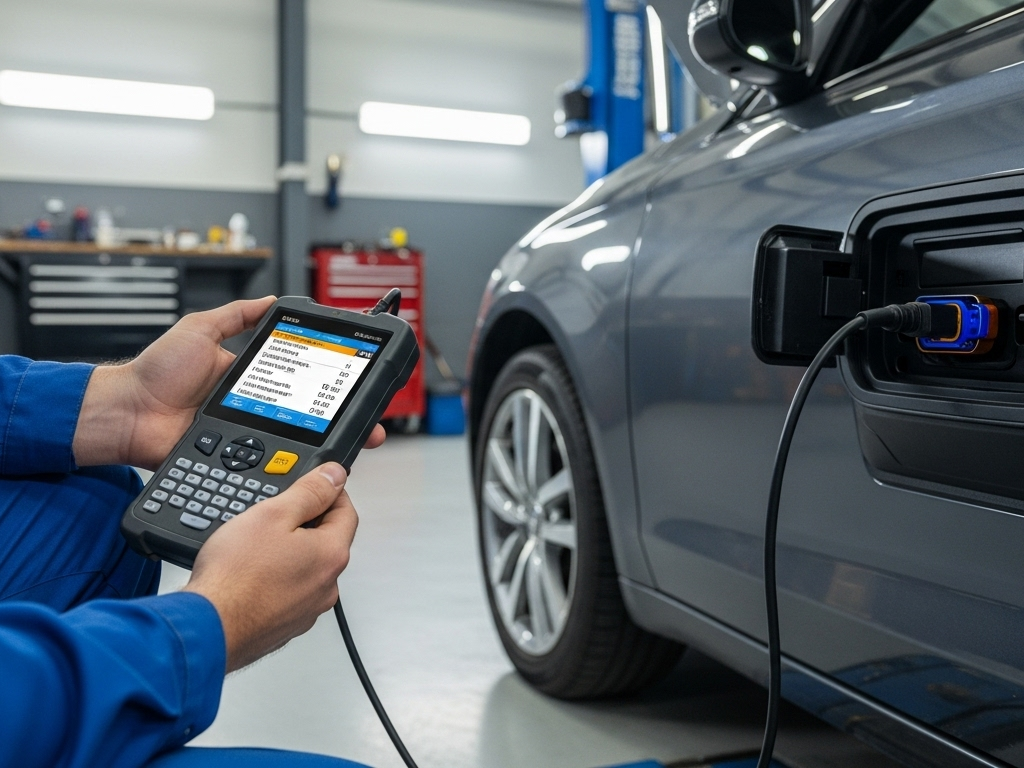
Latest electric motor vehicle diagnostic tools are increasingly including important functionality, principally related to both normative On-Board Diagnostics II (OBD2) integration and Tire Pressure Monitoring System (TPMS) connection. Countless green autos utilize OBD2 ports for gathering key system figures, enabling technicians and custodians to identify prospective errors. Furthermore, integrated TPMS inclusion provides accurate tire tension reports, assisting to amplified safeguarding and power performance. This combination of OBD2 capabilities and TPMS service symbolizes a important development in battery-operated car analysis.
Tire Monitoring Frequency Differences: Eurasia vs. American Continent vs. Oriental Region - A In-depth Study
Various architectures responsible for tracking tire air—TPMS—operate on different radio waves, leading to essential regional differences. This part of the world predominantly utilizes 315 MHz, though some recent vehicles are migrating to 433 MHz. European Union mandates 433.92 MHz, a specific frequency to guarantee consistency across regions. Eastern Asia exhibits a complicated landscape, with some nations using 315 MHz, others 433 MHz, and still different nations employing a blend of both. This variation produces challenges for repair shops and car users when dealing with replacement TPMS receivers or diagnostic hardware, involving careful examination of regional parameters to banish errors and establish proper usability of the TPMS.
Auto Scanners for EV Cars: Tire Info Inspection & Signal Processing
Current car analyzers are progressively broadening to handle EV cars, particularly pertaining to wheel pressure monitoring examination. Unlike combustion-based motors, electric vehicles present distinct challenges when it comes to TPMS verification. Many electric rides use variegated tire sensor platforms radio bands requiring the detector to verifiably identify the frequency in use. This quality empowers repairmen to principally monitor air pressure but also pinpoint the clear band being transmitted by the tire sensor detectors, aiding in undiagnosed assessment of bugs.
Asia TPMS Ranges: Which Wish to Be Aware Of?
Dealing with the world of car TPMS can be a headache, primarily due to the varying ranges utilized across Eurasia, Asia, and the United States. European vehicles predominantly use 433.92 MHz, while multiple Asian countries employ 315 MHz and 433.92 MHz, creating a intricate situation for specialists. In the US, both 315 MHz and 433.92 MHz are frequently used, with 315 MHz being more dominant. As a result, understanding these regional inconsistencies is critical for accurately attending to TPMS malfunctions and selecting the optimal programming tools.
Evolving this Fundamentals: Motor Vehicle Scanning, Battery-Powered Motors, & Tire Gauge System Sensor Wave Differentiation
As professional ride specialists, solely understanding those main points of automotive diagnostics, energy-based vehicle networks, alongside TPMS unit broadcast detecting represents one decisive upcoming stage. That categories explore into standard methods, calling for customized implements and understanding in order to faithfully determine combined with solve complex problems involving tyre management, battery architecture efficiency, even motor failure alerts. In addition, appropriately isolating tire information module bands – regularly range amid alternative builders alongside variants – frequently required to effective synchronization.
Battery Car Troubleshooting: Using OBD2 Scanners to Troubleshoot TPMS
Diagnosing Tire Pressure Monitoring Systems tire pressure systems in electric vehicles electric cars often requires more than exclusively visual inspection. Modern OBD2 analyzers offer remarkable ability to obtain TPMS data and detect potential problems. Utilizing these devices, technicians can analyze fault codes, test sensor state, and even trigger sensor tests, allowing for robust diagnosis of monitoring abnormalities and minimizing idle time. Such is especially important given the surging complexity of EV architecture.
Exploring TPMS Wavelengths: A Comprehensive Explanation for Europe, Asian Continent, and North American Zone
Effectively engaging with wheel pressure devices throughout Europe, Eastern Asia, and the Continent imposes a exhaustive grasp of the alternating broadcast ranges they employ. As opposed to a standardized system, various locations commonly employs specific frequency bands. For instance Western Europe mostly utilizes 315 Megahertz and 433 million nine hundred twenty kHz, while United States and Canada normally operates on 315 MHz range though several fresh models may hold 433.92 MHz. Eastern Asia reveals a more fragmented context, with multiple frequency bands engaged, reliant on the territory and machine builder. tpms sensor frequency europe north america
- Think about regional policies regarding signal range.
- Refer to your driver's guide for explicit signal.
- Utilize a signal reader fit to translating multiple frequencies.